
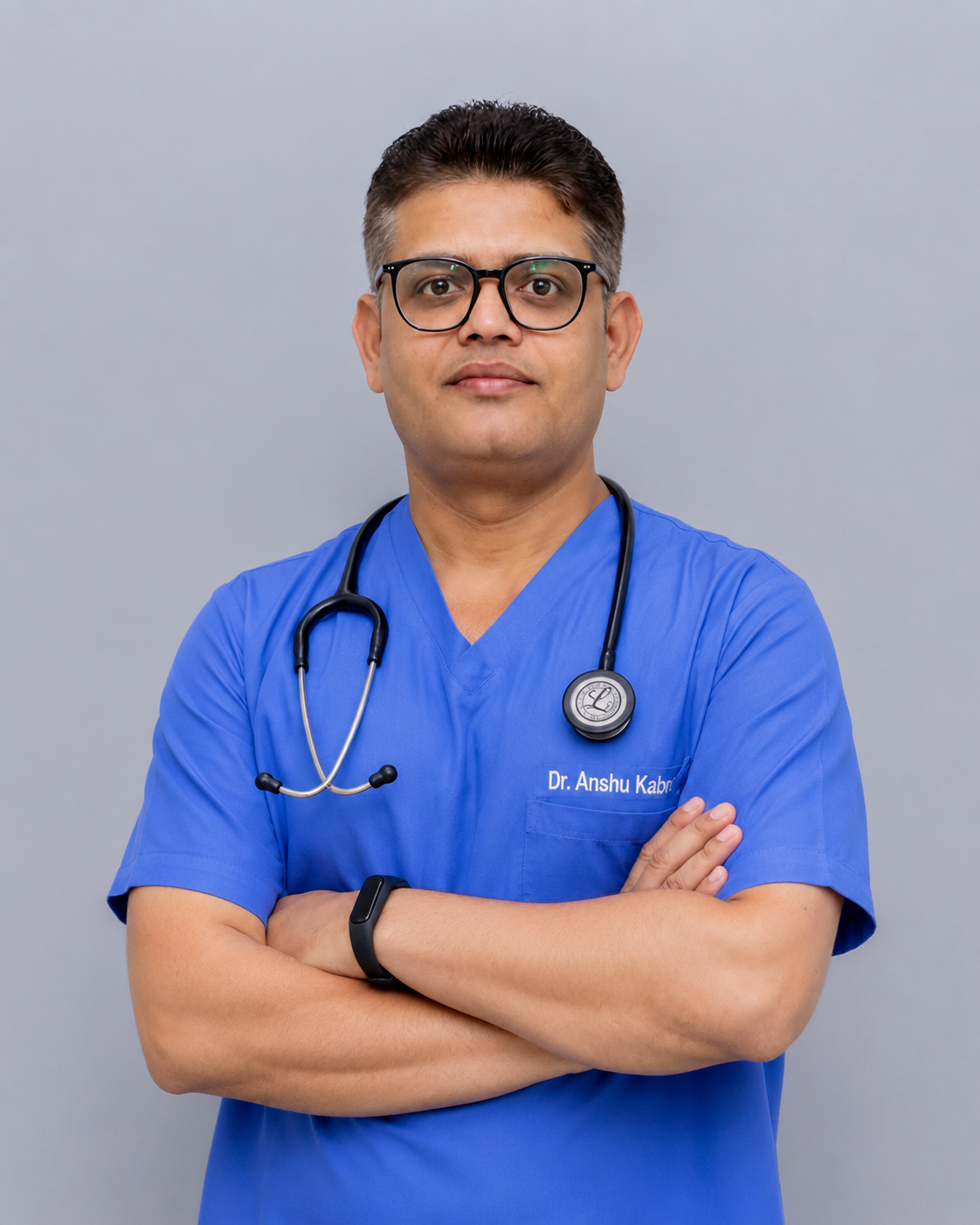
Avoid the trauma of open-heart surgery. Dr. Anshu Kabra offers life-saving, minimally invasive TAVI / TAVR procedures for patients suffering from severe Aortic Stenosis.
Aortic Stenosis occurs when the heart's aortic valve stiffens and narrows, restricting blood flow to the rest of your body. It is a progressive, life-threatening condition. Look out for these severe warning signs:
Feeling an intense lack of oxygen or struggling to breathe, especially during normal physical activity or when lying down flat.
Experiencing pressure, tightness, or angina (chest pain) because the heart muscle is working exponentially harder to pump blood through the narrowed valve.
Episodes of lightheadedness or sudden fainting (syncope), caused by an insufficient amount of blood reaching the brain.
Historically, the only way to replace a failing aortic valve was through traumatic open-heart surgery. Today, TAVI (Transcatheter Aortic Valve Implantation)—also known as TAVR—revolutionizes this approach. As an interventional cardiologist, Dr. Kabra replaces the valve through a tiny puncture in your artery.
Eliminates the massive scarring and bone-healing associated with cracking the chest.
A life-saving alternative for elderly or frail patients deemed too weak for traditional surgery.
Patients often walk within 24 hours and are discharged in just a few days.
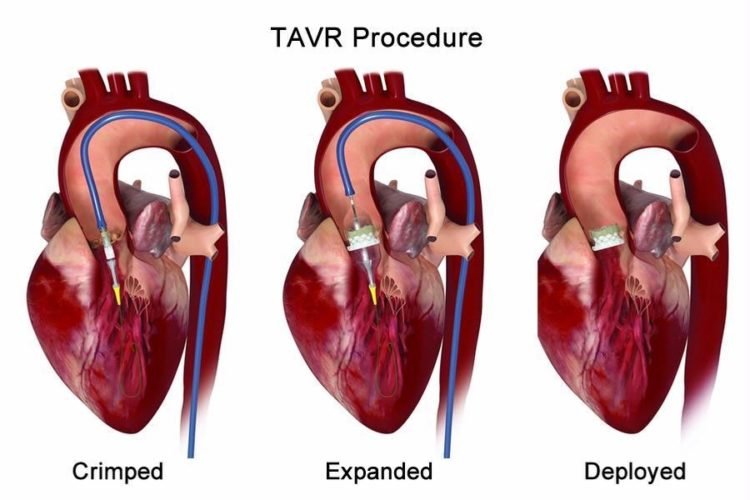
A minimally invasive, catheter-based valve replacement performed without stopping the heart or opening the chest.
While you are under anesthesia, Dr. Kabra makes a small puncture, typically in the femoral artery (in the groin). A thin, flexible tube called a catheter is carefully guided up to your heart.
The new, fully collapsible replacement valve is delivered through the catheter. Once it reaches the site of your diseased valve, it is expanded (often using a tiny balloon). It pushes the old valve leaflets out of the way and takes over the job of regulating blood flow instantly.
The catheter is removed, and the small puncture is sealed. The heart's normal blood flow is restored immediately, rapidly alleviating symptoms of breathlessness and chest pain.
My grandmother is 82. We were told she wouldn't survive an open-heart valve replacement. We were losing hope until we consulted Dr. Kabra for a TAVI. The procedure was done without opening her chest, and she was sitting up the very next day. He gave us our grandmother back.
Understanding this minimally invasive alternative to open-heart valve surgery.
Ask Dr. Kabra DirectlyShare your details and our care coordinator will reach out within a few hours to schedule your assessment.