
Repair a leaking mitral valve safely without open-heart surgery. Consult Dr. Anshu Kabra for the breakthrough, minimally invasive MitraClip procedure to restore your heart's efficiency.
When the leaflets of your mitral valve do not close tightly, blood flows backward into the lungs (Mitral Regurgitation). This forces your heart to work significantly harder and can lead to severe heart failure. Look out for these critical signs:
Struggling to breathe during routine activities, or waking up gasping for air and needing to be propped up by pillows to sleep.
Feeling overwhelming exhaustion because your heart is unable to pump enough oxygen-rich blood to the rest of your body.
Noticing noticeable swelling (edema) in your legs, ankles, feet, or abdomen as fluid builds up due to poor heart function.
Historically, repairing a leaking valve required highly traumatic open-chest surgery. The MitraClip device offers a revolutionary alternative through Transcatheter Edge-to-Edge Repair (TEER).
Using a thin catheter inserted through a vein in your leg, a small clip is delivered straight to the heart. It grasps and clips the two leaking leaflets of the mitral valve together. This allows the valve to close properly, immediately stopping the backward flow of blood while still letting blood flow through normally.
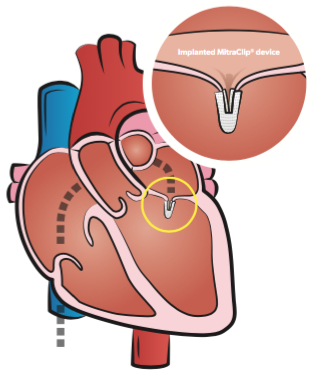
A minimally invasive, catheter-based technique to seal the defect permanently, without any surgical incision to the chest.
Dr. Kabra performs a Transesophageal Echocardiogram (TEE) to capture highly detailed 3D images of your mitral valve. This determines the exact severity of the leak and confirms if your anatomy is suitable for the clip.
Under general anesthesia, a catheter is inserted through a small puncture in your groin vein and guided up to the heart. Using real-time imaging, Dr. Kabra precisely navigates the MitraClip to the mitral valve, grasps the leaking leaflets, and locks the clip in place.
The reduction in mitral regurgitation is assessed instantly in the cath lab before the catheter is removed. Patients experience a rapid improvement in heart failure symptoms and are typically discharged within a couple of days.

My mother was constantly out of breath and too weak for open-heart surgery. Dr. Kabra suggested the MitraClip. The difference was night and day. She was breathing normally the very next morning without any major surgery scars
Understanding non-surgical treatment for congenital heart defects.
Ask Dr. Kabra DirectlyShare your details and our care coordinator will reach out within a few hours to schedule your assessment.