
Restore blood flow and prevent strokes. Dr. Anshu Kabra provides life-saving Peripheral Vascular Disease treatments and Carotid Angioplasties using cutting-edge, minimally invasive stenting.
Atherosclerosis (plaque buildup) doesn't just affect the heart; it can dangerously narrow the arteries in your legs, arms, and neck. Ignoring these symptoms can lead to severe complications, including limb loss or a major stroke:
Experiencing painful muscle cramping in your hips, thighs, or calves while walking or climbing stairs (claudication) that disappears after resting.
Noticeable coldness in your lower leg or foot, especially when compared to the other side, along with severe numbness or weakness.
Sudden weakness or numbness in the face, difficulty speaking, or sudden vision problems. These are critical indicators of a blocked carotid artery in the neck.
You don't need major open surgery to clear blocked blood vessels in your neck or legs. As a leading specialist in Peripheral Vascular Disease[cite: 24], Dr. Kabra utilizes advanced catheter-based Angioplasty to restore healthy circulation.
Tiny balloons and stents are used to crush blockages in the legs, saving limbs from amputation and eliminating severe walking pain.
A delicate, life-saving procedure to open the arteries in your neck, ensuring optimal blood flow to the brain to prevent a stroke.
Entirely performed through a tiny needle puncture, leading to a rapid, comfortable recovery.
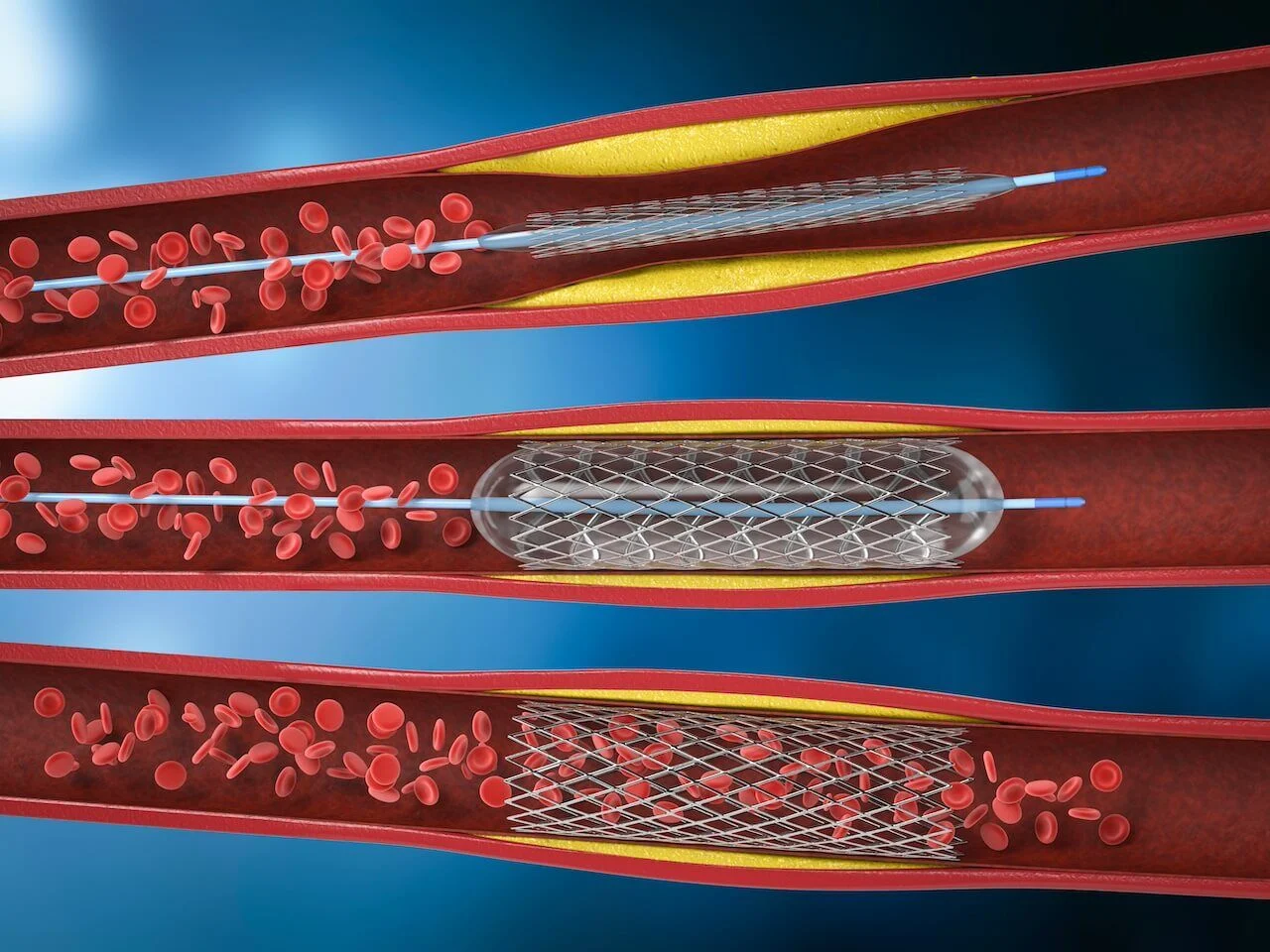
A minimally invasive, catheter-based procedure to reopen narrowed vessels outside the heart — no surgical incision required.
Dr. Kabra inserts a thin catheter through an artery (usually in the groin or wrist). Contrast dye is injected to precisely map the exact location and severity of the blockage in your leg or neck.
A specialized balloon-tipped catheter is guided directly into the narrowed artery. It is carefully inflated to compress the hardened cholesterol plaque against the artery walls, instantly widening the blood channel.
A permanent metal mesh stent is placed to keep the artery propped open. During Carotid Angioplasty, Dr. Kabra also utilizes an "embolic protection device" (a tiny filter) to catch any loose plaque, ensuring it doesn't travel to the brain.

My mother was suffering from mini-strokes because of a severely blocked artery in her neck. Dr. Kabra performed a Carotid Angioplasty. He placed a stent to keep the artery open. We felt so safe in his hands, and she has been completely stroke-free since the procedure.
Understanding treatment for narrowed leg and neck arteries.
Ask Dr. Kabra DirectlyShare your details and our care coordinator will reach out within a few hours to schedule your assessment.